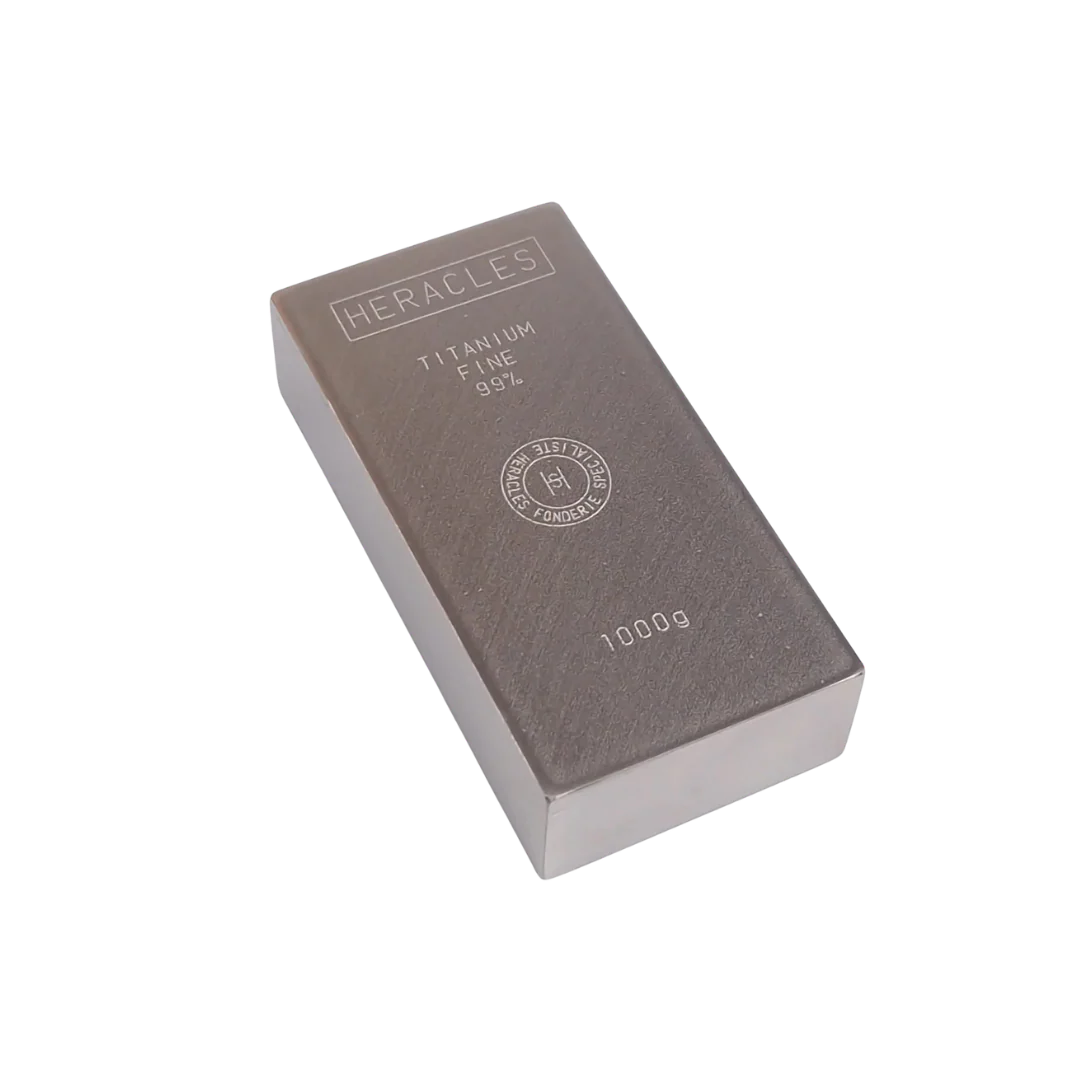
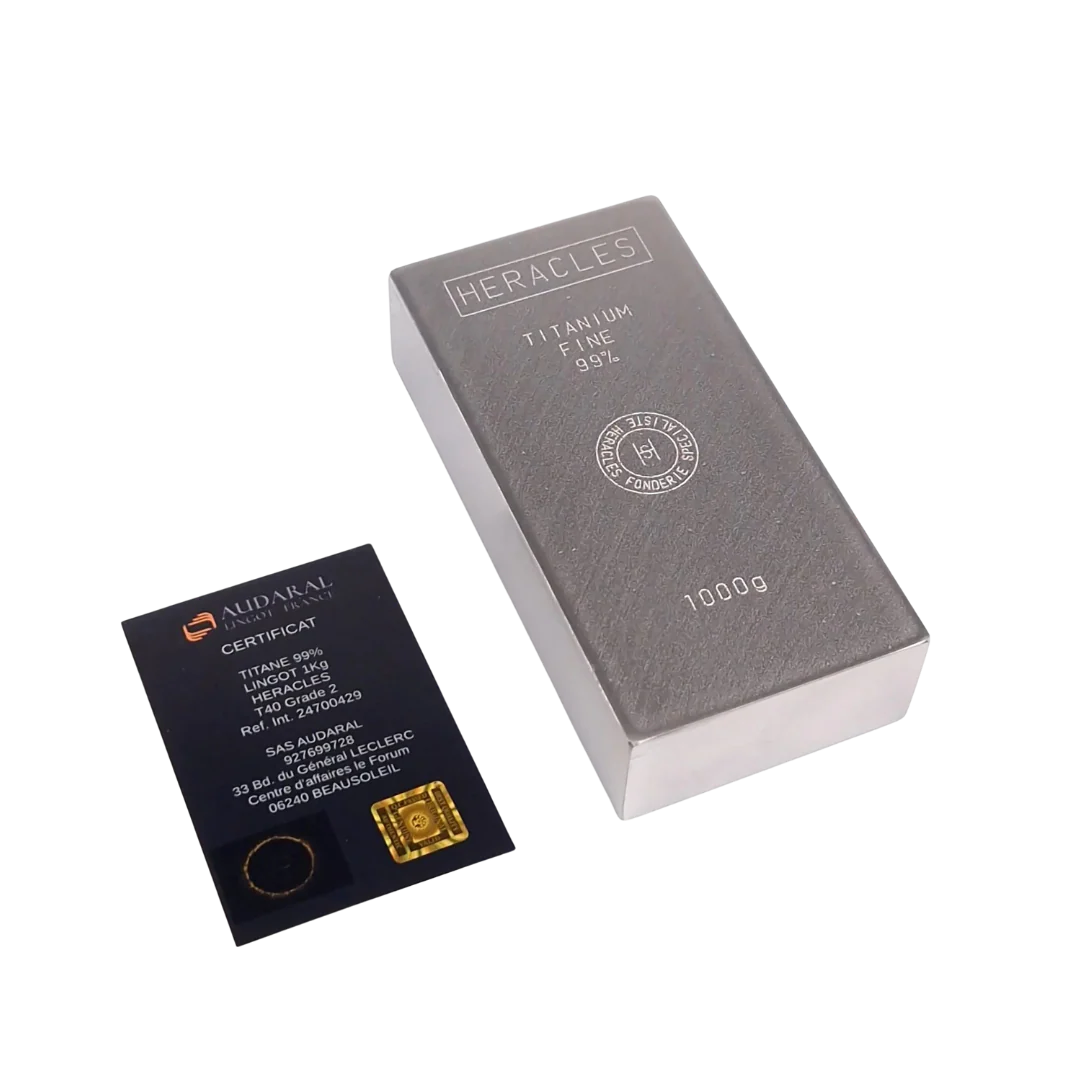
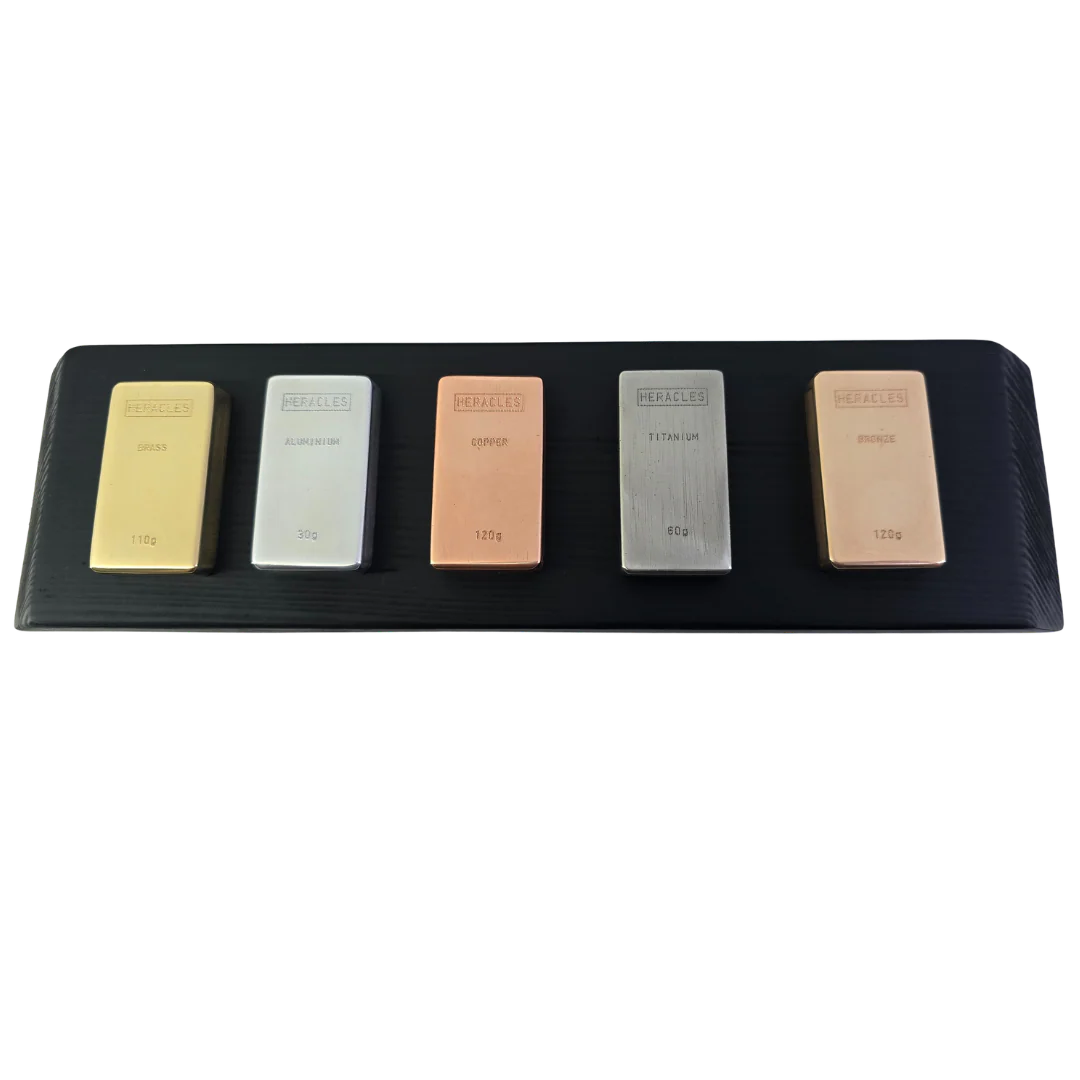
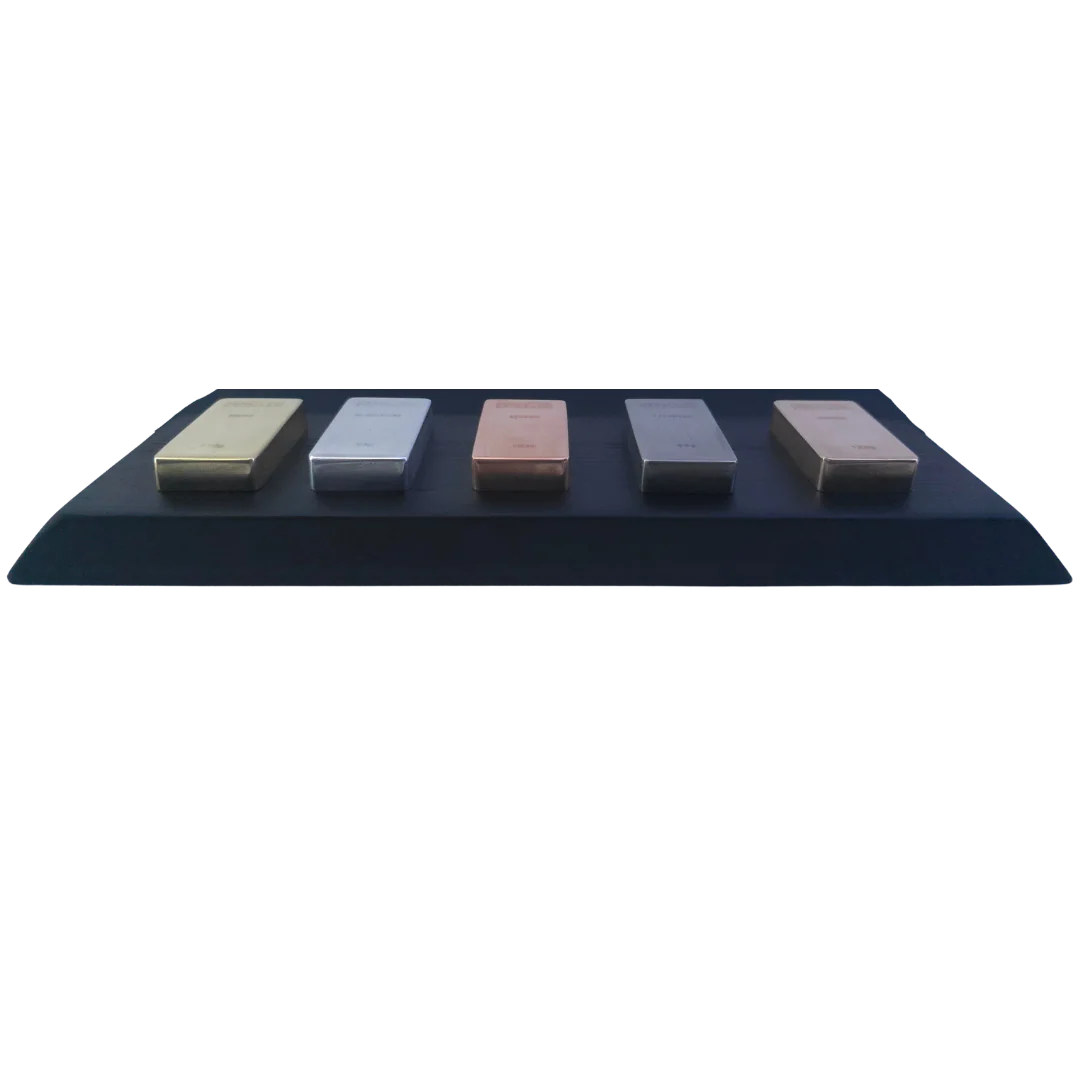
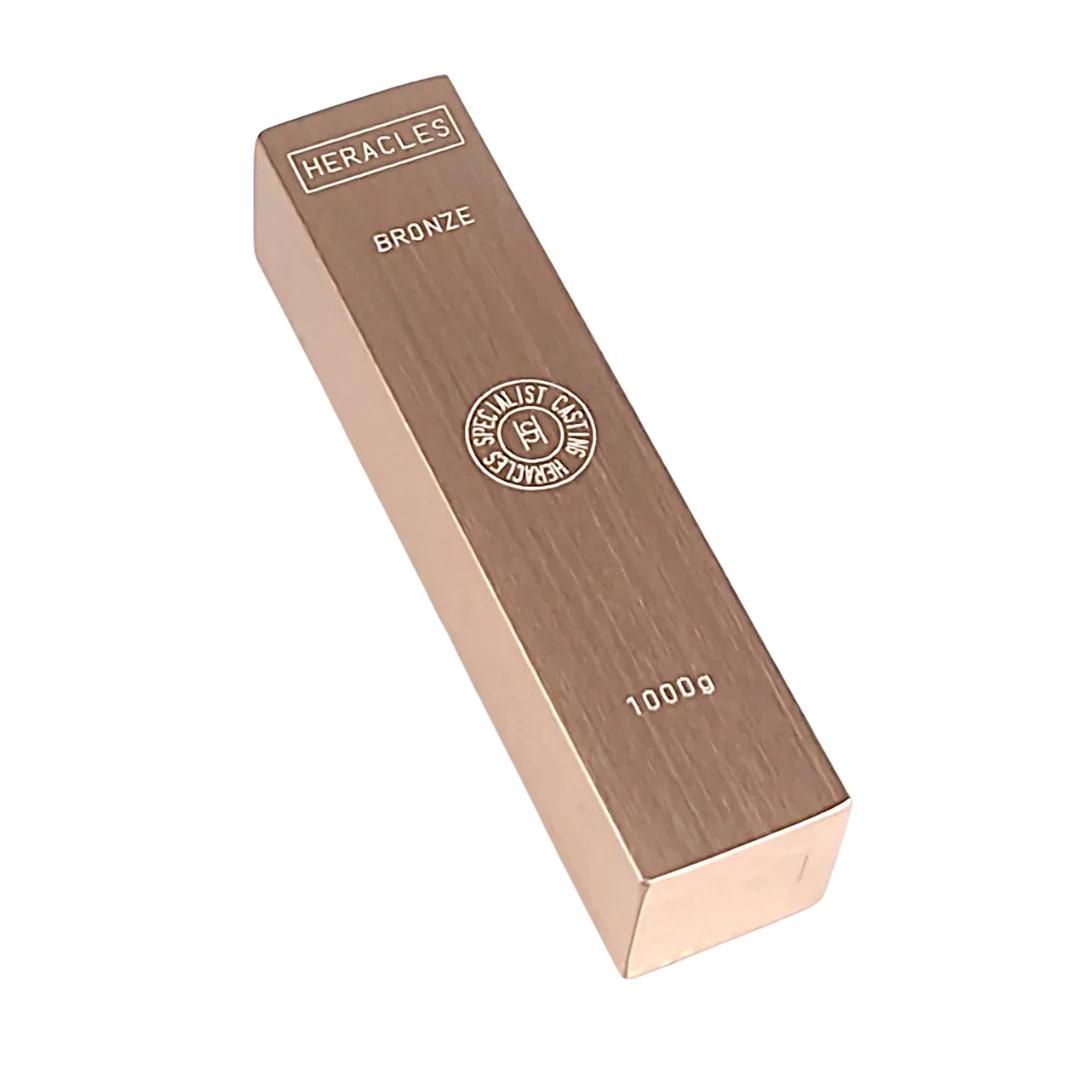
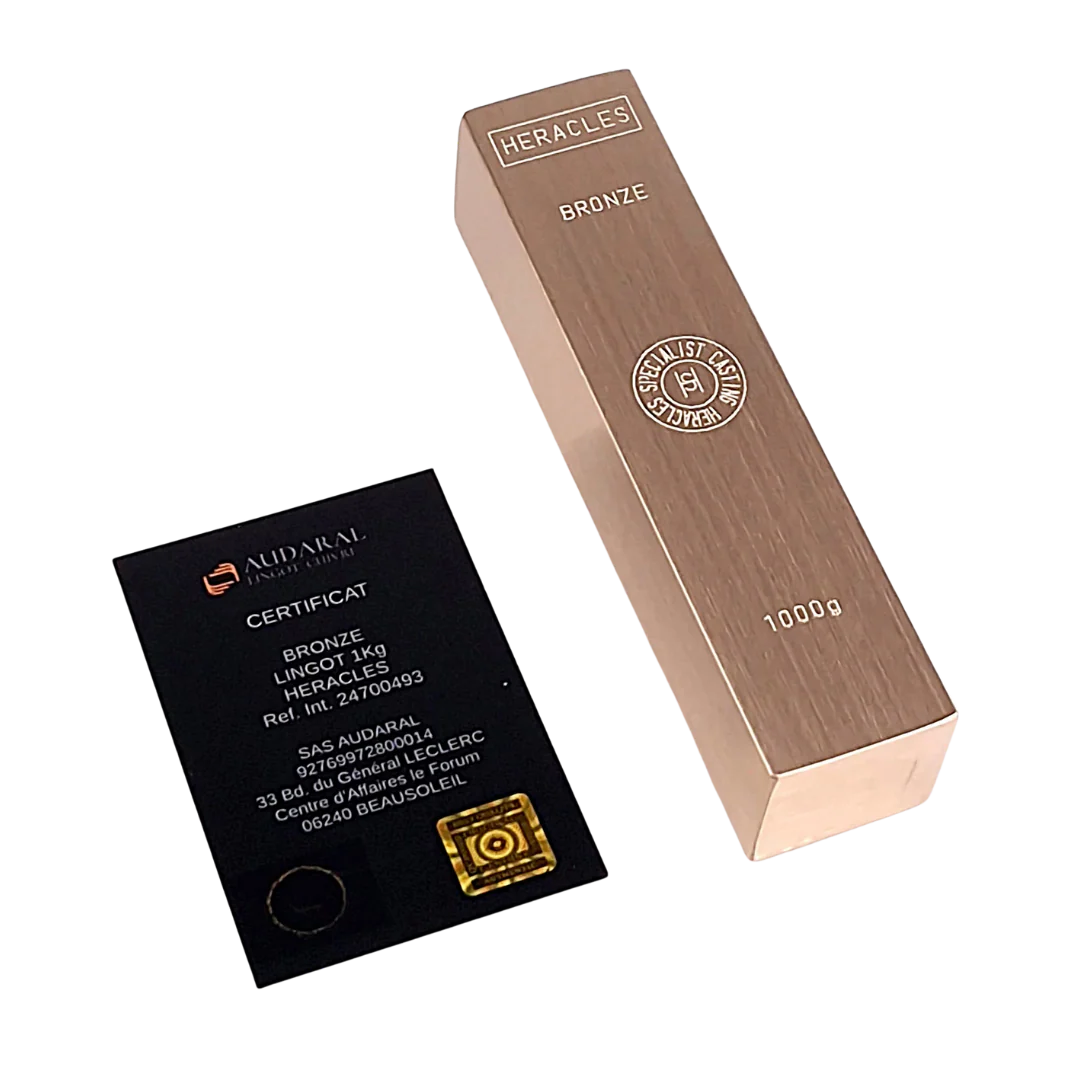
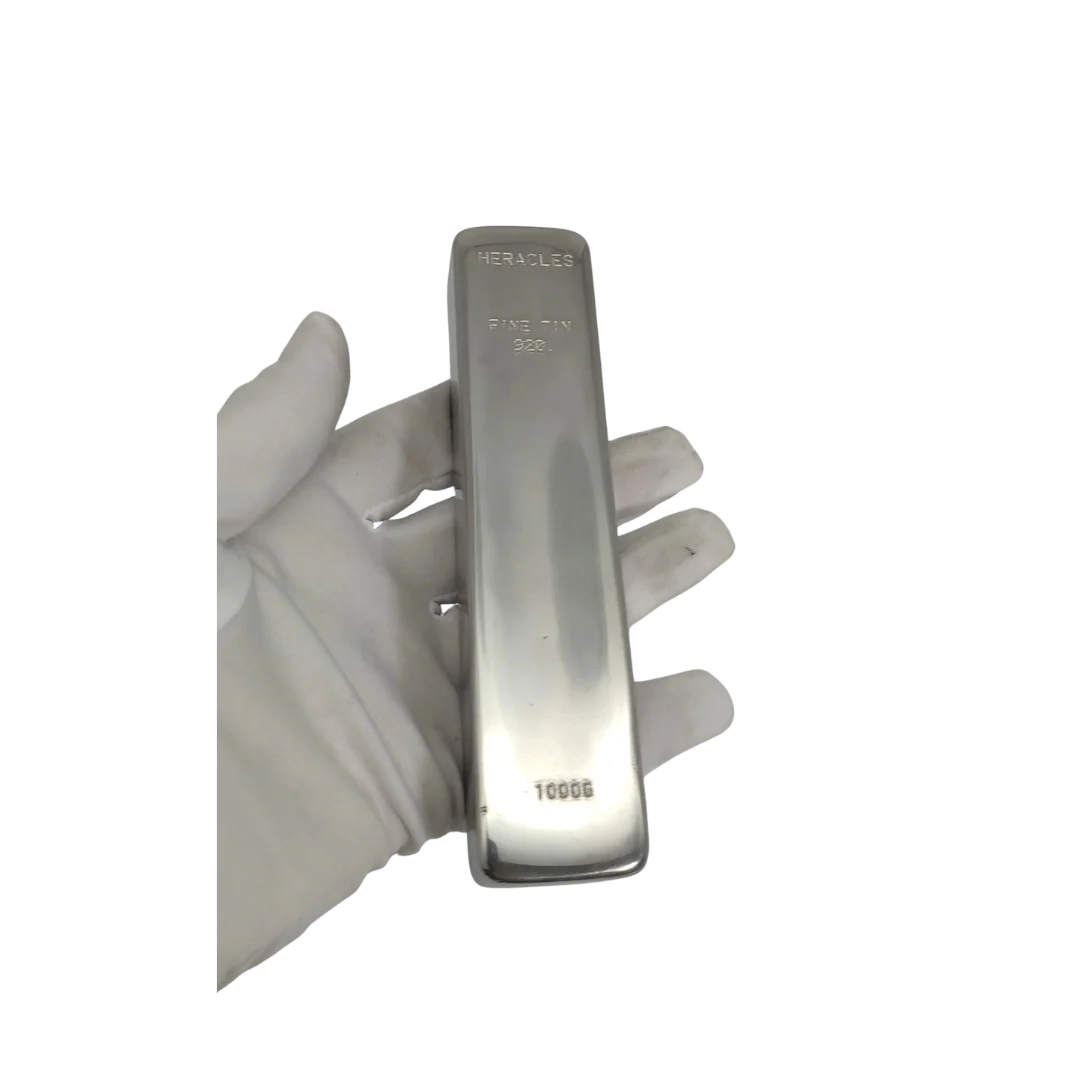
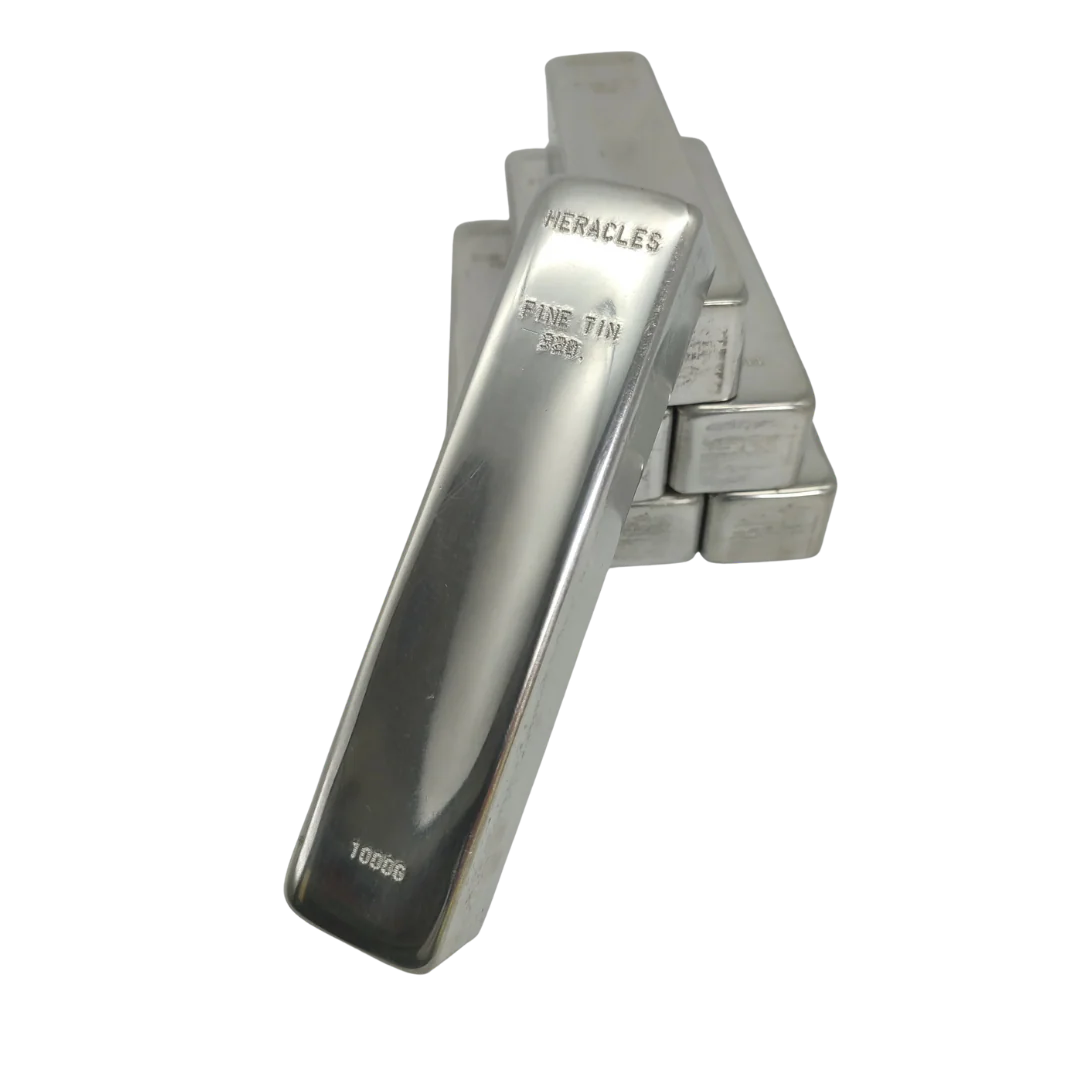
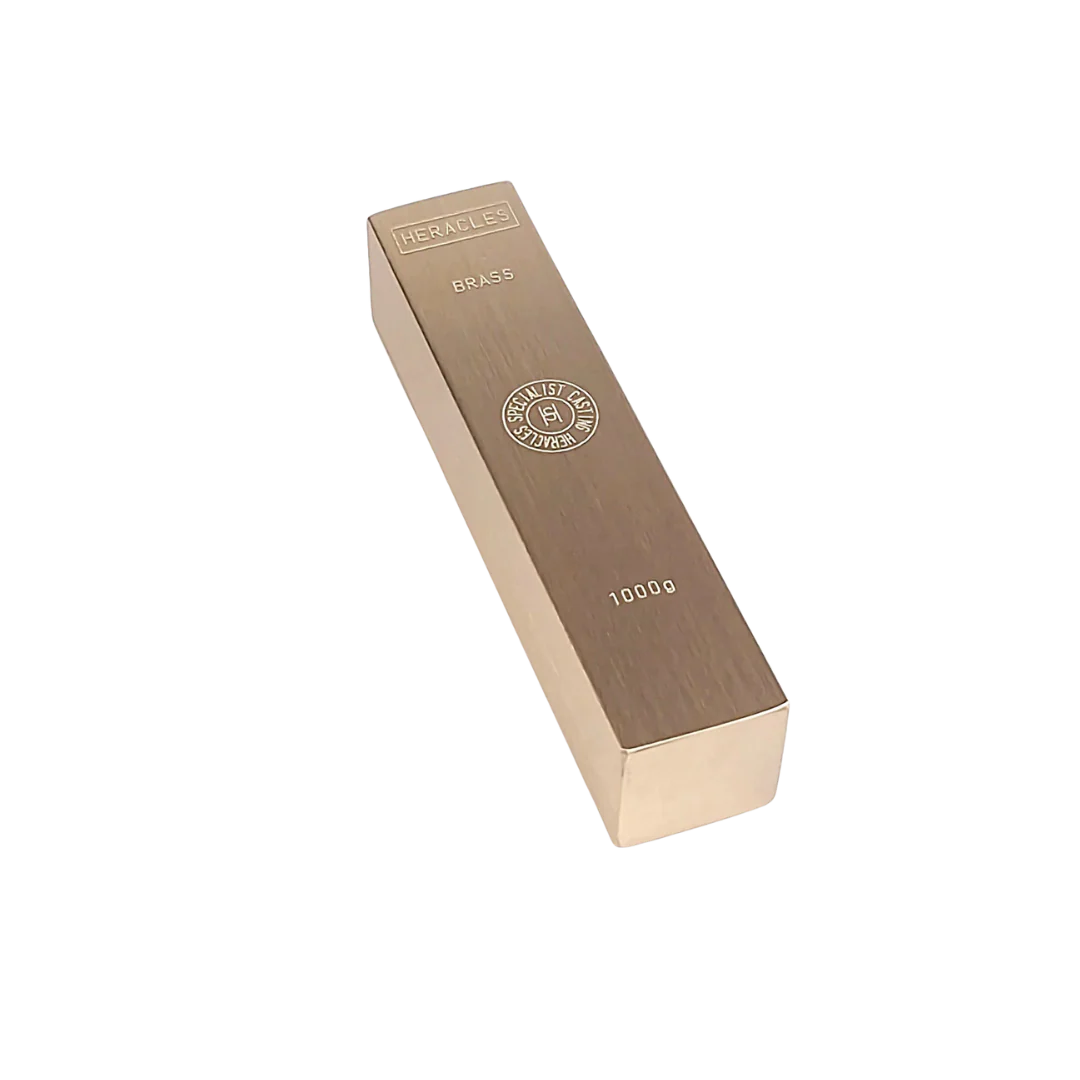
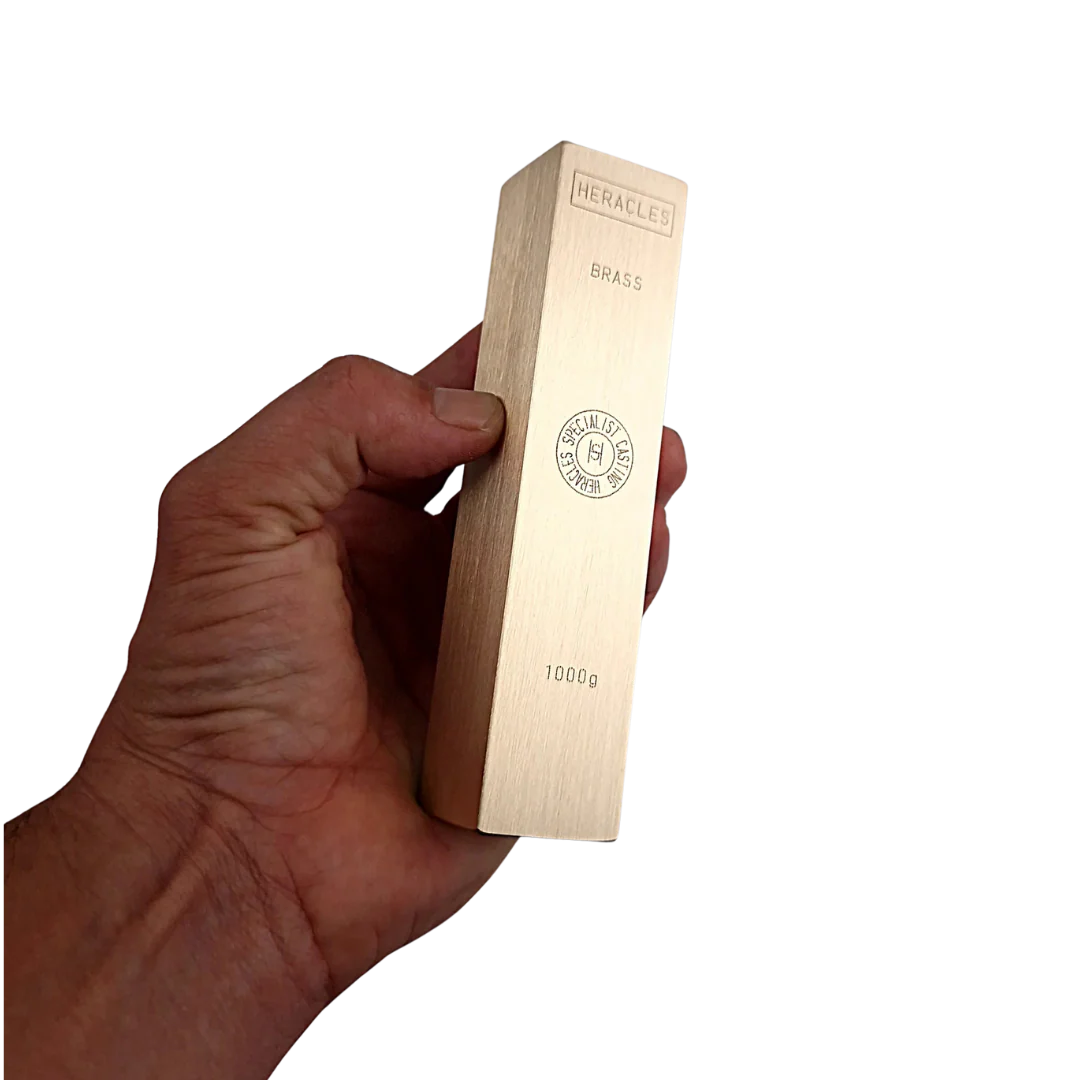
Heracles 1kg Brass Bar
Brass is a yellow alloy composed primarily of copper and zinc, renowned for its exceptional ductility and malleability. The production of brass from suitable ores was well established by metallurgists in ancient times. By the 1st century BC, brass was already in circulation as currency across various regions of Asia Minor. Its use subsequently expanded throughout Asia and Europe, most notably under the Roman Empire, which introduced the brass sestertius coin. In Europe, early artifacts—such as the 1st-century BC Gallic wild boar emblem discovered at Soulac-sur-Mer—further attest to its widespread application. Since the Middle Ages, brass has continued to serve a wide range of functional and decorative purposes across the continent.
Product Information
Product Information
Shipping & Returns
Shipping & Returns
Heracles 1kg Brass Bar
Heracles 1kg Brass Bar
Brass is a yellow alloy composed primarily of copper and zinc, renowned for its exceptional ductility and malleability. The production of brass from suitable ores was well established by metallurgists in ancient times. By the 1st century BC, brass was already in circulation as currency across various regions of Asia Minor. Its use subsequently expanded throughout Asia and Europe, most notably under the Roman Empire, which introduced the brass sestertius coin. In Europe, early artifacts—such as the 1st-century BC Gallic wild boar emblem discovered at Soulac-sur-Mer—further attest to its widespread application. Since the Middle Ages, brass has continued to serve a wide range of functional and decorative purposes across the continent.
Product Information
Product Information
Shipping & Returns
Shipping & Returns
Description
Brass is a yellow alloy composed primarily of copper and zinc, renowned for its exceptional ductility and malleability. The production of brass from suitable ores was well established by metallurgists in ancient times. By the 1st century BC, brass was already in circulation as currency across various regions of Asia Minor. Its use subsequently expanded throughout Asia and Europe, most notably under the Roman Empire, which introduced the brass sestertius coin. In Europe, early artifacts—such as the 1st-century BC Gallic wild boar emblem discovered at Soulac-sur-Mer—further attest to its widespread application. Since the Middle Ages, brass has continued to serve a wide range of functional and decorative purposes across the continent.